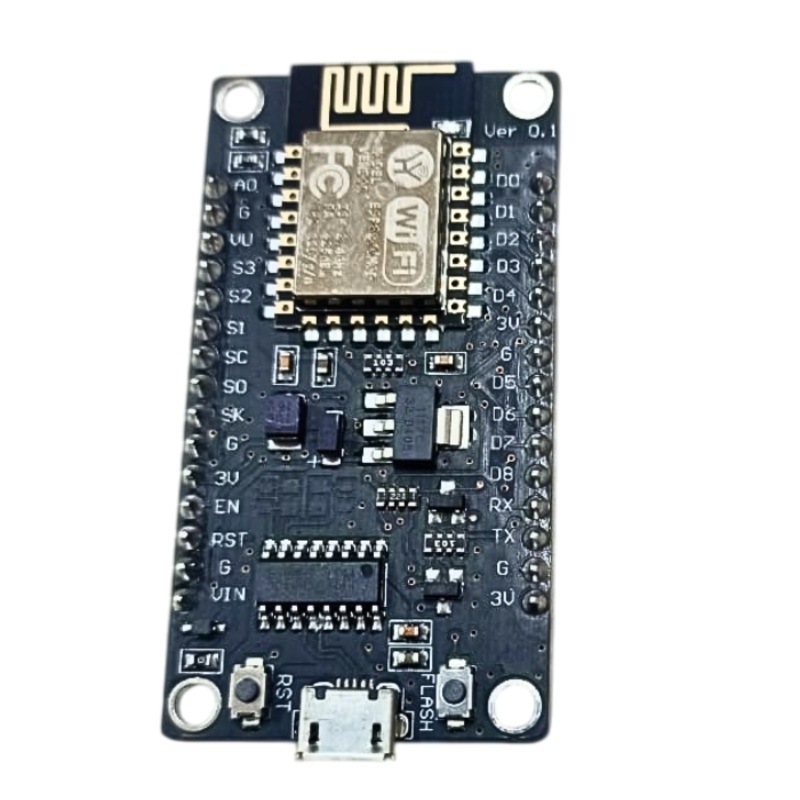
Node MCU ESP8266 V3 (LOLIN CH340 chip)
The Lolin NodeMCU ESP8266 V3 WiFi Module is your key to unlocking the potential of the Internet of Things (IoT). If you’re searching for a seamless and affordable IoT development solution in India, you’ve found it.
This versatile NodeMCU V3 module brings IoT innovation to your fingertips, and you can conveniently purchase it online at the best price. Our NodeMCU V3 module is designed to cater to your IoT needs comprehensively.
Equipped with a built-in Micro-USB interface, CH340 USB-TTL converter, and full I/O support, this module simplifies IoT development. It’s compatible with the Arduino platform, making it a favorite among developers.
Simplifying IoT product prototyping, the NodeMCU ESP8266 V3 supports Lua scripting, GPIO (General Purpose Input/Output), PWM (Pulse Width Modulation), IIC (Inter-Integrated Circuit), 1-Wire, and ADC (Analog-to-Digital Converter) all in one board.
This wide range of features opens up a world of possibilities for your IoT projects. With fast leading-edge technology and the inclusion of modern development tools like Node.js, your IoT journey becomes efficient and cost-effective.
The NodeMCU V3 is designed to make IoT accessible to everyone. So, why wait? Buy the Lolin NodeMCU ESP8266 V3 WiFi Module online in India and explore the limitless potential of IoT. Get started on your IoT journey with the best price and free shipping.
Looking for the best price for the Lolin NodeMCU ESP8266 WiFi Module online?
At Robocraze, the price starts at 159, with final pricing varying based on ongoing offers, stock availability, and promotional discounts. We focus not just on competitive pricing but also on delivering superior quality boards that undergo strict quality checks before dispatch. Unlike many low-cost alternatives in the market, our Lolin NodeMCU ESP8266 modules are carefully sourced to ensure stable WiFi performance, reliable GPIO functionality, and long-term durability for your IoT and embedded projects. When you shop with us, youre not just getting a low price youre investing in quality, authenticity, and dependable technical support.
Check out: Particle Photon Development Board
Check out : Node MCU ESP8266 V3 (LOLIN CH340 chip) (pack of 25)
Pinout:
Pinout OfNode MCU ESP8266 V3 (LOLIN CH340 chip)
Key Features:
- Utilizes CH340G instead of CP2102 for enhanced performance.
- Supports Wireless 802.11 b/g/n standard for seamless connectivity.
- Operates at 2.4GHz and supports WPA/WPA2 security modes for secure data transmission.
- Offers STA/AP/STA + AP three operating modes for versatile usage.
- Built-in TCP/IP protocol stack supports multiple TCP Client connections (up to 5 MAX).
- Supports UART / GPIO data communication interface for flexible connectivity.
- Allows Over-the-Air (OTA) firmware upgrades for convenient maintenance.
- Supports Smart Link Smart Networking for easy setup and configuration.
- ESP8266 has an IO Pin for expanded functionality and interfacing.
- Eliminates the need for downloading or resetting during operation.
- Offers a comprehensive set of tools for ESP8266 development.
- Provides the lowest-cost WiFi solution for IoT development.
- Suitable for Arduino-like hardware IO projects.
- Open-source, interactive, programmable, and simple to use.
- Integrated WiFi MCU ESP8266 for easy prototyping and development.
- Features built-in USB-TTL serial with reliable CH340G for stability across platforms.
- Advanced API for hardware IO reduces redundant work in configuring hardware.
- Event-driven API for network applications, enabling Nodejs-style coding on a compact MCU.
Comparison:
| Specification | Amica NodeMCU | Lolin NodeMCU | NodeMCU Wroom32 |
| Microcontroller | ESP-8266 32-bit | ESP-8266 32-bit | ESP-WROOM-32 |
| processor | Xtensa single core 32 bit L106 | Xtensa single core 32 bit L106 | Tensillica Xtensa LX6 microprocessor with 2 cores |
| NodeMCU Size | 49mm x 26mm | 58mm x 32mm | 49mm x 25 mm |
| Pin Spacing | 0.9″ (22.86mm) | 1.1″ (27.94mm) | 0.9″ (22.86mm) |
| Clock Speed | 80 MHz | 80 MHz | 160 MHz |
| USB to Serial | CP2102 | CH340G | CP2102 |
| USB Connector | Micro USB | Micro USB | Micro USB |
| Operating Voltage | 2.5 V to 3.6 V | 2.5 V to 3.6 V | 2.5 V to 3.6 V |
| Input Voltage | 4.5V-10V | 4.5V-10V | 4.5V-15V |
| Flash Memory | 4 MB | 4 MB | 4MB |
| SRAM | 64KB | 64KB | 520KB |
| ROM | – | – | 448KB |
| Digital I/O Pins | 11 | 11 | 16 |
| Analog In Pins | 1 | 1 | 16 |
| ADC Range | 0-3.3V | 0-3.3V | 0-3.3V |
| UART | 1 | 1 | 2 |
| SPI | 1 | 1 | 1 |
| I2C | 1 | 1 | 1 |
| CAN | – | – | 2 |
| WiFi Built-In | 802.11 b/g/n | 802.11 b/g/n | 802.11 b/g/n |
| Bluetooth Built-in | – | – | Bluetooth 4.2 |
| Inbuilt sensor | No inbuilt sensor | No inbuilt sensor | Inbuilt hall sensor, temperature sensor |
Applications:
- Prototyping of IoT devices
- Low power battery operated applications
- Network projects
- Projects requiring multiple I/O interfaces with Wi-Fi and Bluetooth functionalities
read more :GOOGLE ASSISTANT CONTROLS LIGHT BULB
OLED Working and Demo with ESP8266 – Part 1
Read our blog explaining the arduino vs esp8266, whichompares Arduino Uno and NodeMCU microcontrollers and discusses various features.
LoLin NodeMCU ESP8266 Quick Start Guide
1. Connect the Board
- Use a USB cable to connect the NodeMCU to your computer.
2. Arduino IDE Setup
- Open Arduino IDE and go to File Preferences.
- Add this URL to Additional Boards Manager URLs: http://arduino.esp8266.com/stable/package_esp8266com_index.json
- Go to Tools Board Boards Manager, search for ESP8266, and install ESP8266 by ESP8266 Community.
- Select your board: Tools Board NodeMCU 1.0 (ESP-12E Module).
- Select the correct COM port: Tools Port.
3. Test with Blink Example
- Open File Examples 01.Basics Blink.
- Change LED pin if necessary (usually D4 / GPIO2).
- Click Upload and wait for Done uploading.
- Observe the onboard LED blinking.
4. Example Blink Code
#define LED_BUILTIN 2 // NodeMCU onboard LEDvoid setup() { pinMode(LED_BUILTIN, OUTPUT);}void loop() { digitalWrite(LED_BUILTIN, HIGH); delay(500); digitalWrite(LED_BUILTIN, LOW); delay(500);}
5. Next Steps
- Use Serial Monitor (Tools Serial Monitor) at 115200 baud for debug messages.
- Try WiFi examples: connect to a network, print IP address, build a simple web server.
- Explore GPIO, IC, SPI, and sensors with the NodeMCU boards built-in WiFi.
LoLin NodeMCU ESP8266 Applications
- IoT projects: connect sensors and devices to the cloud.
- Home automation: smart lights, switches, and appliances control.
- Wireless sensor networks: temperature, humidity, and motion monitoring.
- WiFi-enabled robots and remote-controlled vehicles.
- Web servers and dashboards for data logging and control.
- Smart gadgets and wearable electronics projects.
- Prototyping and learning embedded systems programming.
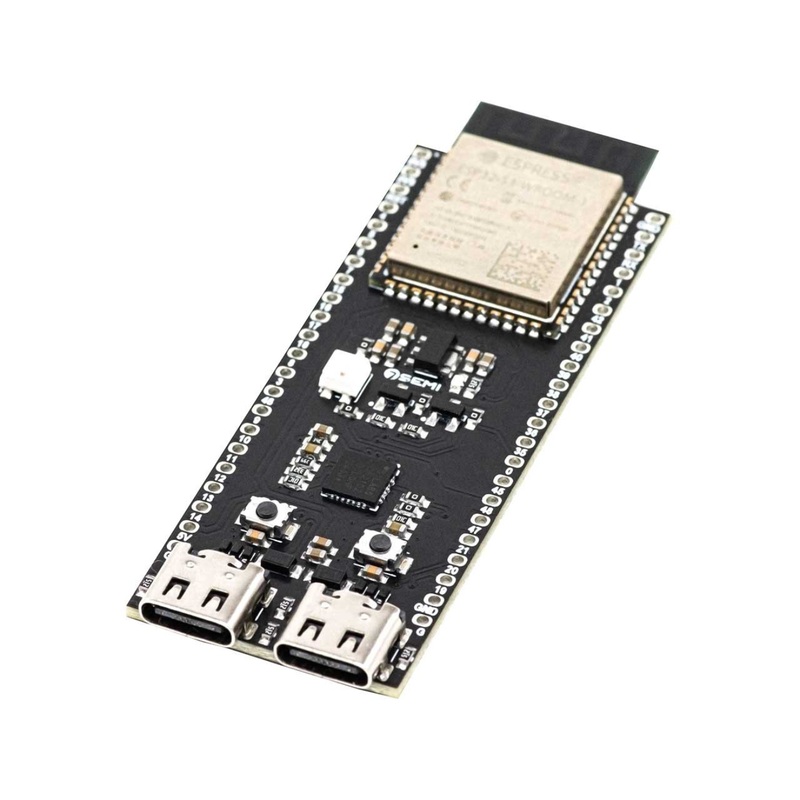
NodeMCU ESP8266 vs ESP32 Comparison
| Feature | NodeMCU ESP8266 | ESP32 |
|---|---|---|
| Processor | Single-core Tensilica L106, 80160MHz | Dual-core Xtensa LX6, 160240MHz |
| RAM | ~50KB usable | ~520KB SRAM |
| WiFi | 802.11 b/g/n | 802.11 b/g/n, faster, more stable |
| Bluetooth | Not supported | Bluetooth 4.2 & BLE supported |
| GPIO Pins | ~11 usable GPIOs | ~34 GPIOs, more peripherals supported |
| ADC / DAC | 1 ADC, 10-bit | 2 ADCs, 12-bit; 2 DACs |
| PWM Channels | Up to 16 channels | Up to 16 channels, more configurable |
| Power Consumption | Lower overall, simpler | More features, higher power, but with deep sleep modes |
| Best Use Case | Basic IoT projects, WiFi sensors, small automation tasks | Advanced IoT, Bluetooth-enabled devices, complex sensors, robotics, audio projects |
| Cost | Lower cost | Higher cost, but more features |
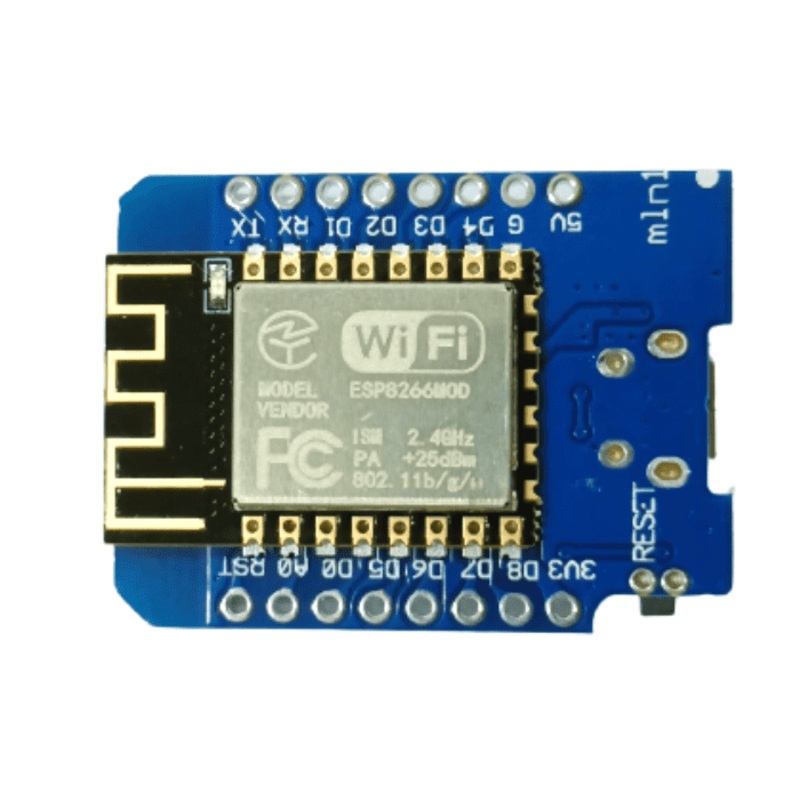
Lolin NodeMCU ESP8266 WiFi Module Specifications Comparison:
| Feature | Lolin NodeMCU ESP8266 | Generic ESP8266 Board | ESP-01 Module |
|---|---|---|---|
| Microcontroller | ESP8266 (Tensilica L106 32-bit) | ESP8266 (varies by vendor) | ESP8266 |
| WiFi Standard | 802.11 b/g/n | 802.11 b/g/n | 802.11 b/g/n |
| USB Interface | Built-in USB to Serial (CH340) | May or may not include | No (External USB-TTL required) |
| Flash Memory | 4MB | 1MB4MB (varies) | 1MB |
| GPIO Pins | ~11 Digital I/O | Varies | Limited (2 usable GPIO) |
| Operating Voltage | 3.3V | 3.3V | 3.3V |
| Programming Support | Arduino IDE / Lua | Arduino IDE / Lua | Arduino IDE (via adapter) |
| Ease of Use | Beginner-friendly, Plug & Play | Moderate | Requires additional setup |
Reviews
There are no reviews yet.